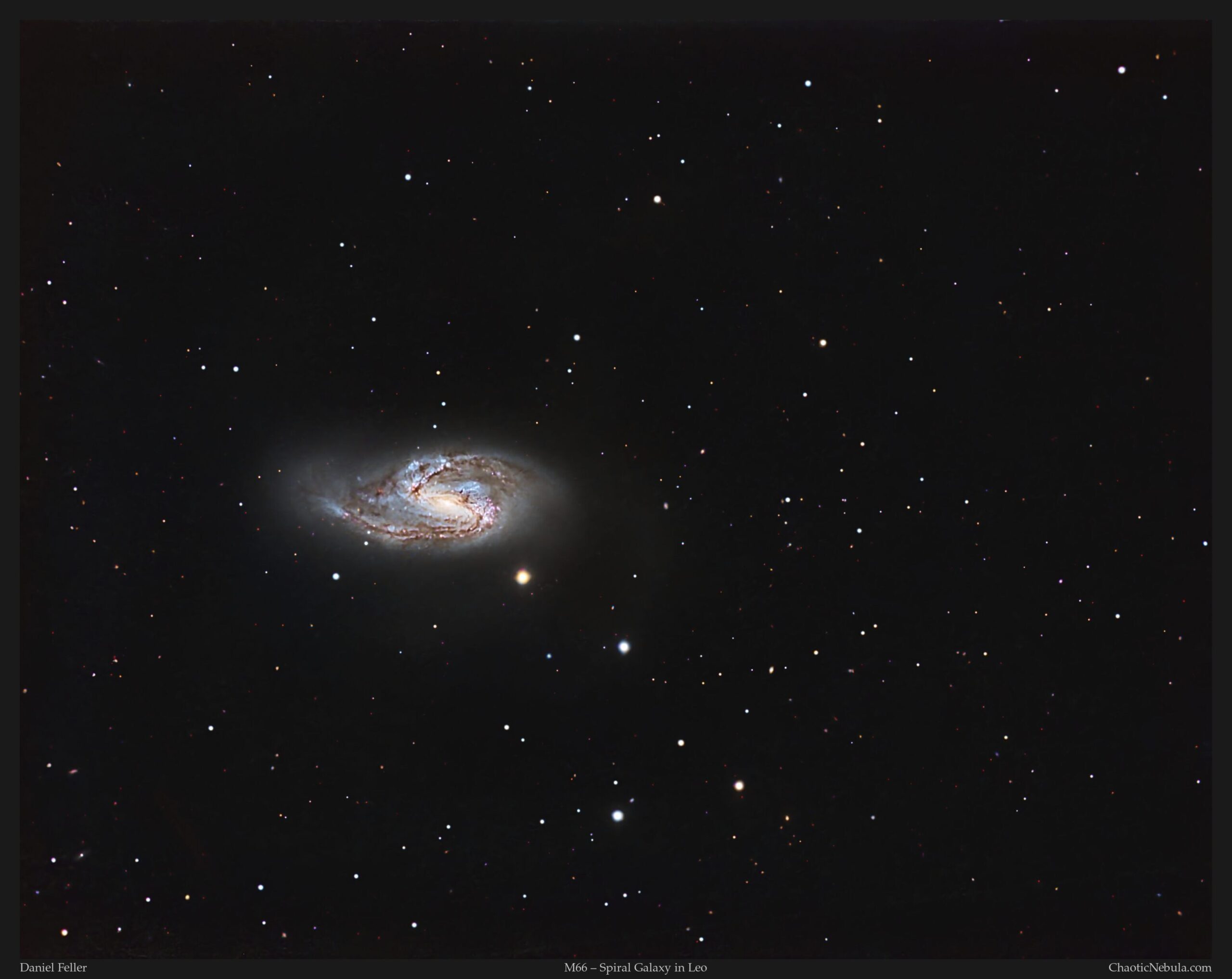
M66 – An intermediate spiral galaxy in Leo

Messier 66 (M66), also known as NGC 3627, serves as the vibrant and slightly more chaotic counterpart to M65 within the Leo Triplet. Located roughly 36 million light-years away in the constellation Leo, M66 is the largest and most luminous member of this famous trio. While M65 is celebrated for its symmetry, M66 is favored by astrophotographers for its asymmetric spiral arms and intense regions of star formation, which create a dynamic and colorful target for deep-sky imaging.

(more…)

Comments Off on M66 – An intermediate spiral galaxy in Leo

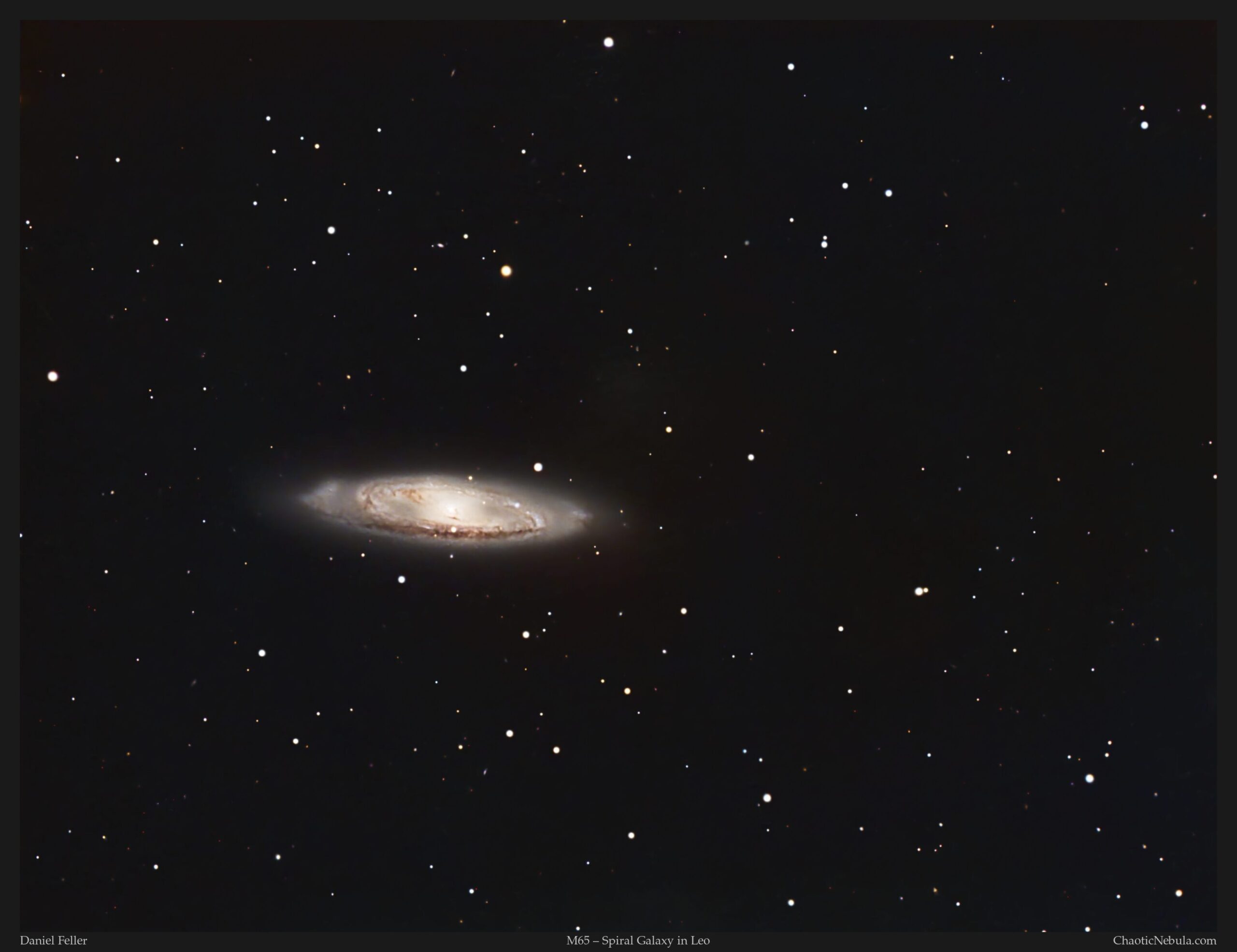
M65 – An intermediate spiral galaxy in Leo

Messier 65 (M65), also cataloged as NGC 3623, is a striking intermediate spiral galaxy located approximately 35 million light-years away in the constellation Leo. As a prominent member of the famous Leo Triplet, M65 sits in a gravity-bound neighborhood alongside M66 and NGC 3628. Spanning roughly 100,000 light-years in diameter, its high inclination relative to Earth provides astrophotographers with a stunning, nearly edge-on perspective of its tightly wound structure.

(more…)

Comments Off on M65 – An intermediate spiral galaxy in Leo

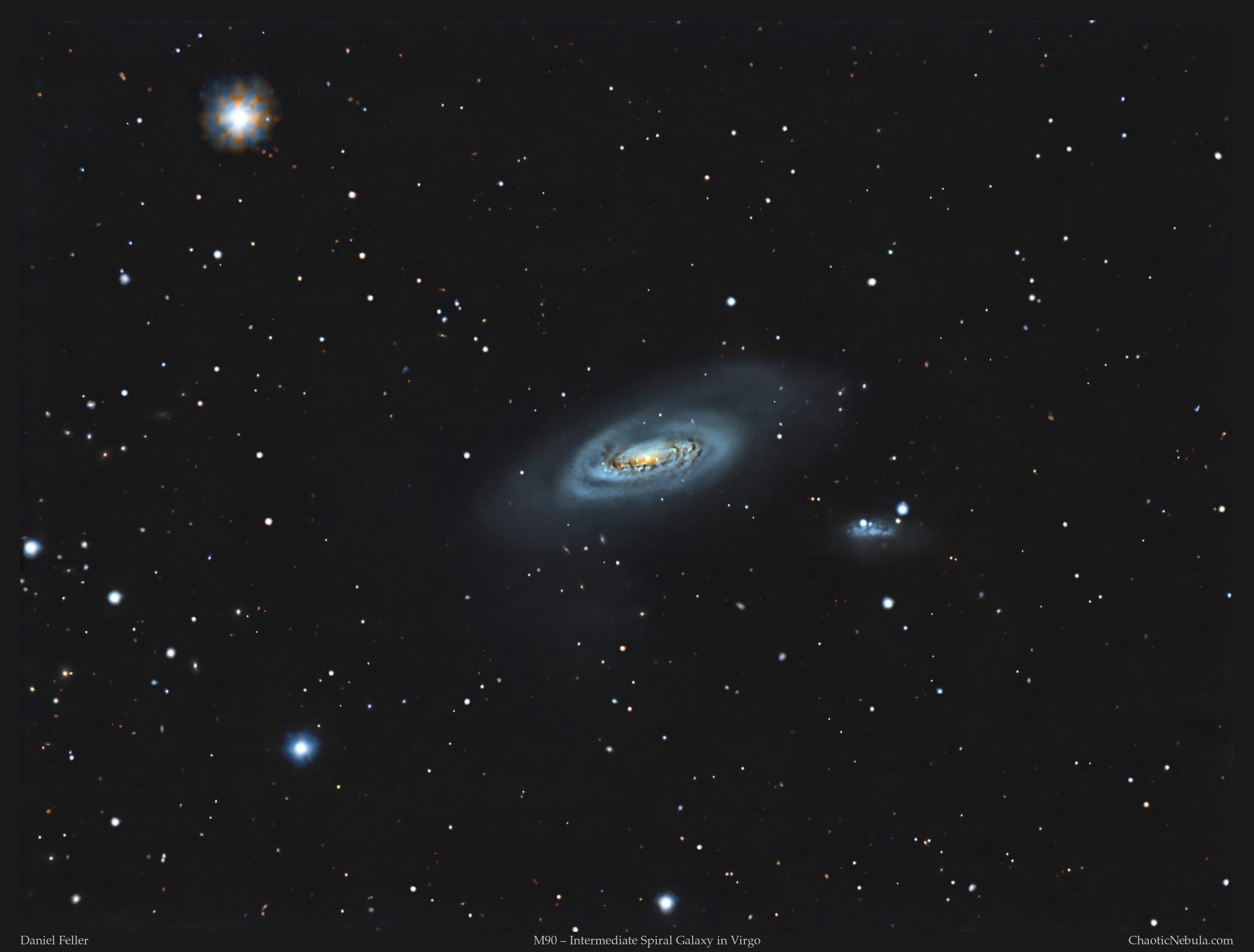
Messier 90 (M90): An Intermediate Spiral Galaxy in Virgo

M90, also known as NGC 4548, is a intermediate spiral galaxy located about 60 million light-years away in the Virgo Constellation. This galaxy is a member of the Virgo Cluster of galaxies, a dense region of space containing thousands of galaxies. M90 stands out for its large size, approximately 120,000 light-years in diameter, and its distinctive orientation, which makes it appear almost edge-on from Earth.

M90 is an intermediate spiral galaxy, which places it between a normal spiral galaxy and a barred spiral galaxy. It has a weak or intermediate bar structure with loosely wound spiral arms and moderate star formation activity.

One of the intriguing aspects of M90 is its close interaction with nearby galaxies, particularly IC 3583. IC 3583 is a smaller galaxy that lies just a few million light-years from M90. The two galaxies are in the process of interacting gravitationally, which is significant because their close proximity suggests that they could be exchanging gas, triggering star formation, or even on a collision course that could eventually result in a merger. This interaction is typical in galaxy clusters, where galaxies are packed closely together, and their gravitational forces can lead to complex tidal interactions.

(more…)
Comments Off on Messier 90 (M90): An Intermediate Spiral Galaxy in Virgo

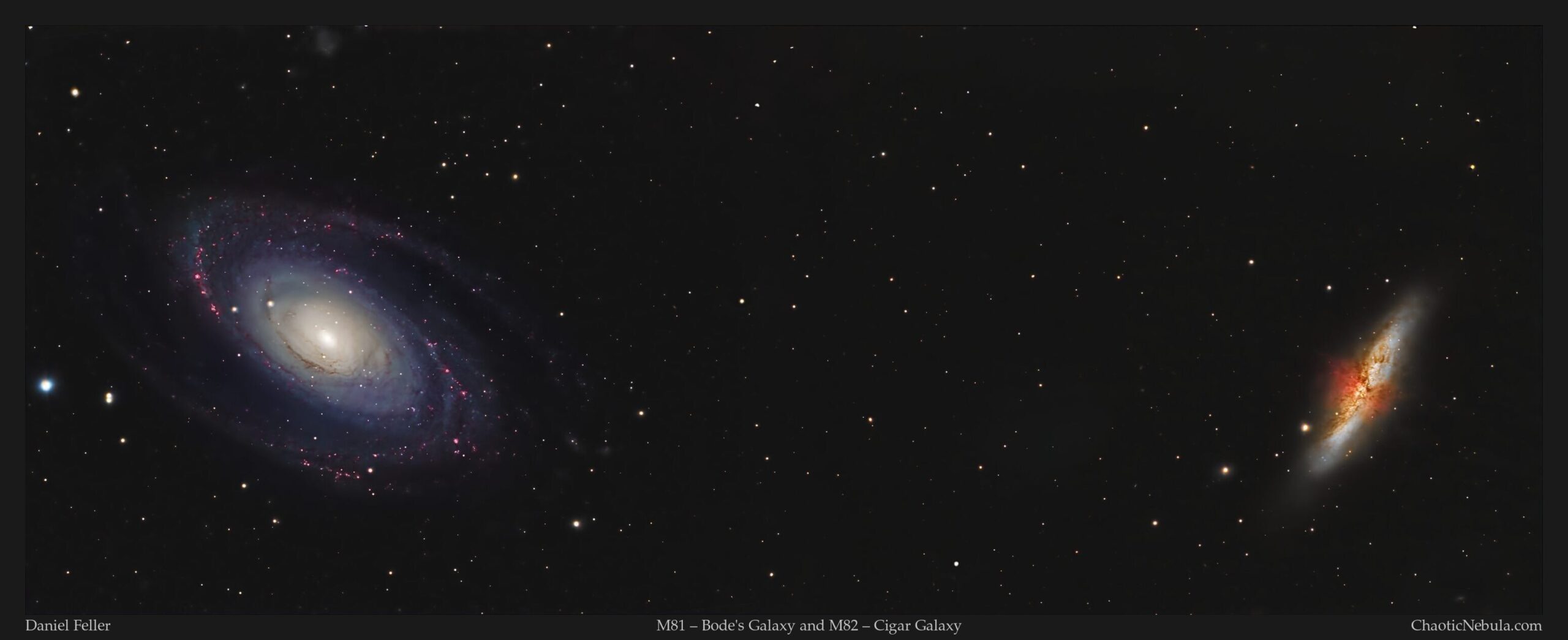
Messier 81-82 (M81-M82): Bode’s Galaxy and the Cigar Galaxy Mosaic

Nestled within the constellation Ursa Major (the Great Bear) lies a notable pair of galaxies: M81 and M82.

Messier 81 (on the left), also known as M81 or NGC 3031, is a grand design spiral galaxy located about 11.8 million light-years away. It’s one of the brightest galaxies visible from Earth and is characterized by its well-defined spiral arms extending from a bright central nucleus.

Messier 82 (on the right), also known as M82 or NGC 3034, is a starburst galaxy situated about 12 million light-years away. Unlike M81, M82 exhibits a highly irregular and distorted shape due to intense gravitational interactions with its neighbor, M81. This interaction has triggered vigorous star formation, making M82 one of the brightest infrared sources in the sky.

(more…)

Comments Off on Messier 81-82 (M81-M82): Bode’s Galaxy and the Cigar Galaxy Mosaic