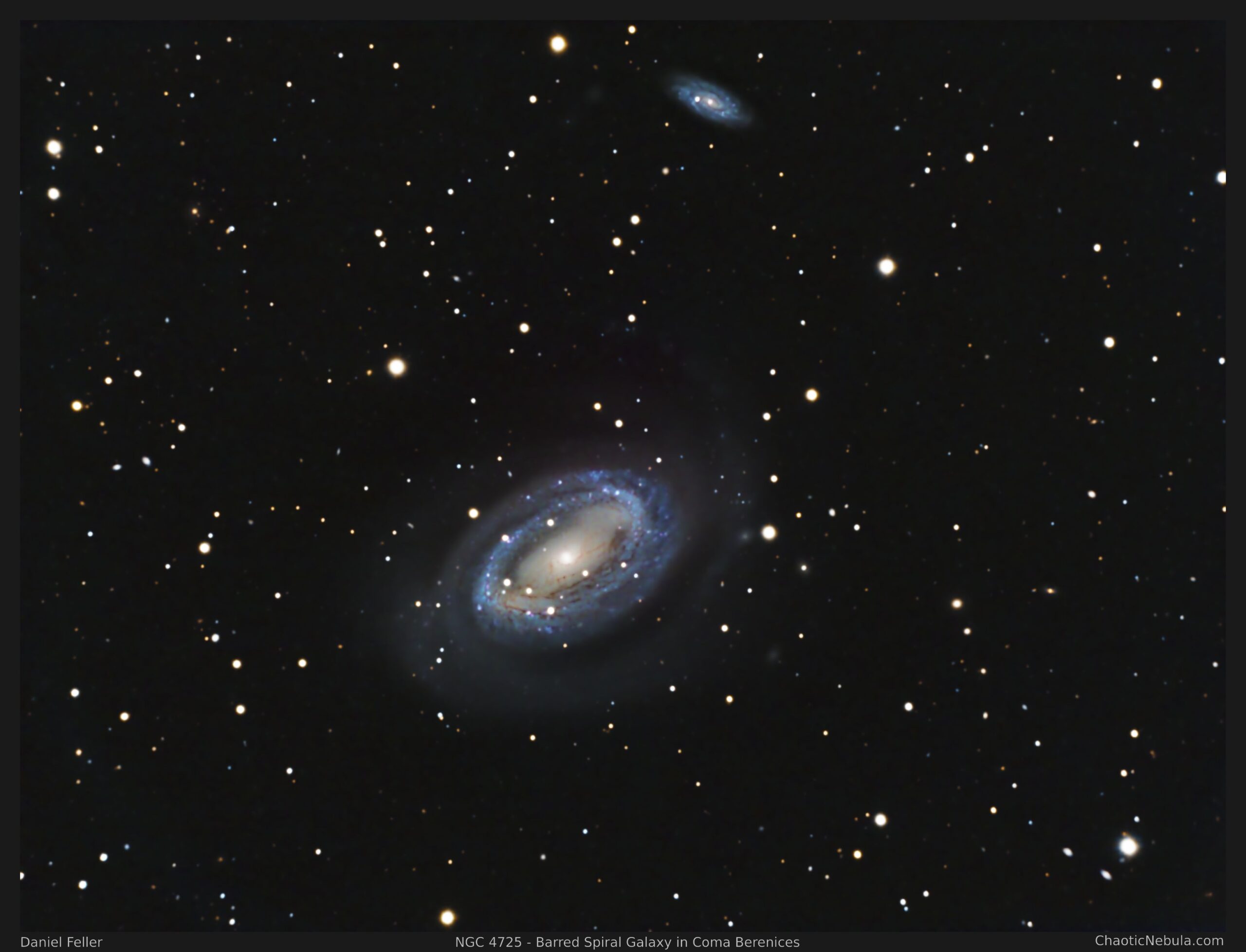
NGC 4725: Barred Spiral Galaxy in Coma Berenices

NGC 4725 is a striking spiral galaxy situated in the constellation Coma Berenices. Its placement in the night sky makes it a great subject for astronomers and astrophotographers alike. From Earth, NGC 4725 is 40 million light years away (40 mega-light years). This particular galaxy is the brightest member of the Coma I group of galaxies.

NGC 4725 showcases a grand spiral structure with well-defined arms that sweep outward from its bright central core. The galaxy spans a considerable distance, with its spiral arms adorned with regions of active star formation and interstellar dust.

(more…)

Comments Off on NGC 4725: Barred Spiral Galaxy in Coma Berenices

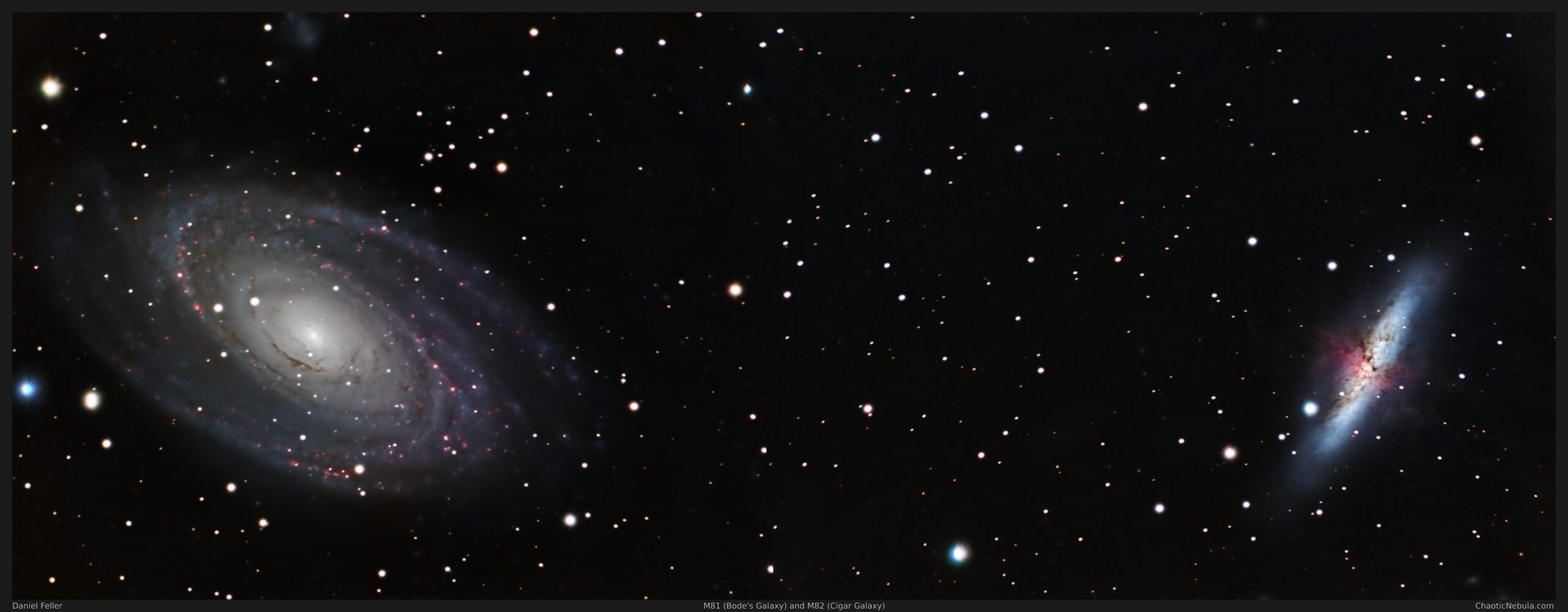
Imaging Bode’s Galaxy and the Cigar Galaxy in a Mosaic

Galaxies M81 and M82 stand as celestial neighbors in the Ursa Major constellation, captivating astronomers and stargazers alike with their unique features and cosmic stories.

M81, also known as Bode’s Galaxy, is a grand spiral galaxy, exhibiting well-defined spiral arms and a prominent central bar structure. The outer arms are adorned with regions of star formation and dust lanes. Around 29 million light years away, the bright central region contributes to the galaxy’s overall brightness.

(more…)

Comments Off on Imaging Bode’s Galaxy and the Cigar Galaxy in a Mosaic

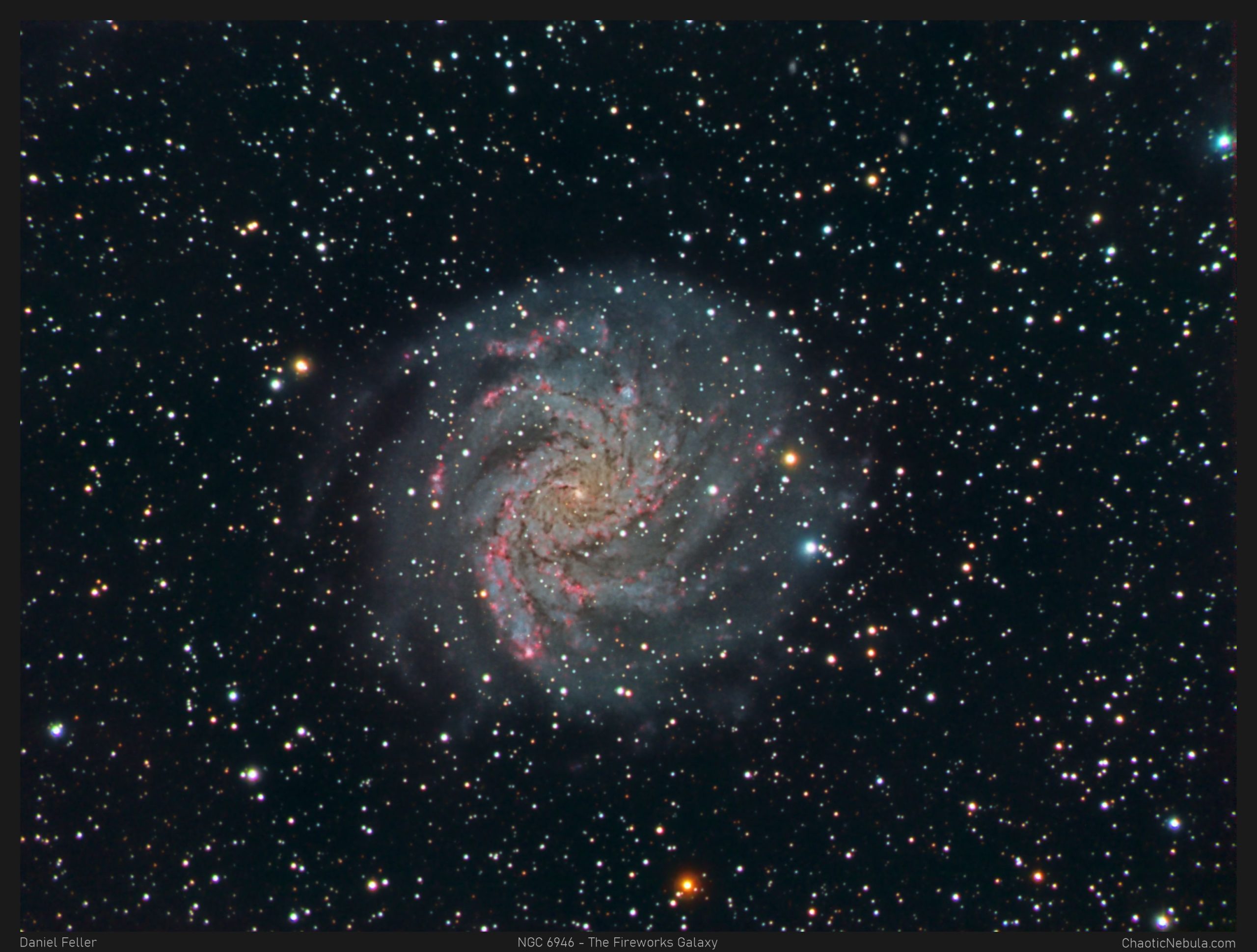
NGC 6946 – The Fireworks Galaxy in Cepheus and Cygnus

The galaxy NGC 6946 is around 25 million light years away located on the boundary of the constellations Cepheus and Cygnus. The Fireworks Galaxy is about half the size of the Milky Way.

Upon closer inspection of the image, you will notice a strange bright spot located above and to the right of the galaxy core. At first, it looks like a flaw in the image, but it is actually identified as the Red Ellipse (appears blue in the image). This area could be a super bubble or a supernova remnant. As for now, it is still unknown.

(more…)

0 Comments

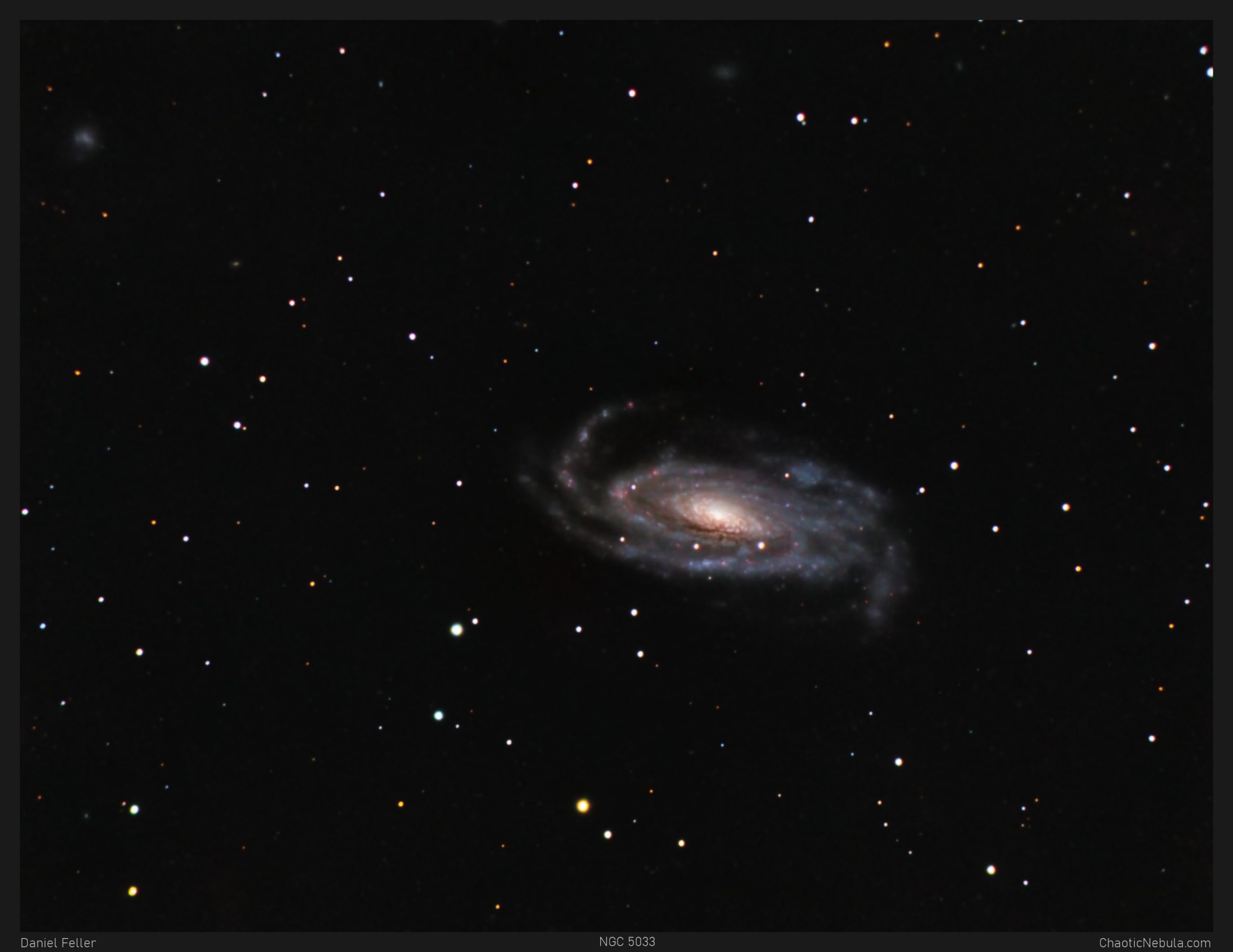
NGC 5033 – Spiral Galaxy in Canes Venatici

The galaxy NGC 5033 is somewhere between 40-60 million light years away. From initial observations, it looks pretty bland when compared to the amazing galaxies of M51 – The Whirlpool Galaxy or M63 – The Sunflower Galaxy. When we take a closer look, a few things become visible.

First, in the core of NGC 5033 is a very visible emission band (dark patch). This is most likely caused by extremely hot gas around the galaxy’s supermassive black hole.

(more…)

Comments Off on NGC 5033 – Spiral Galaxy in Canes Venatici