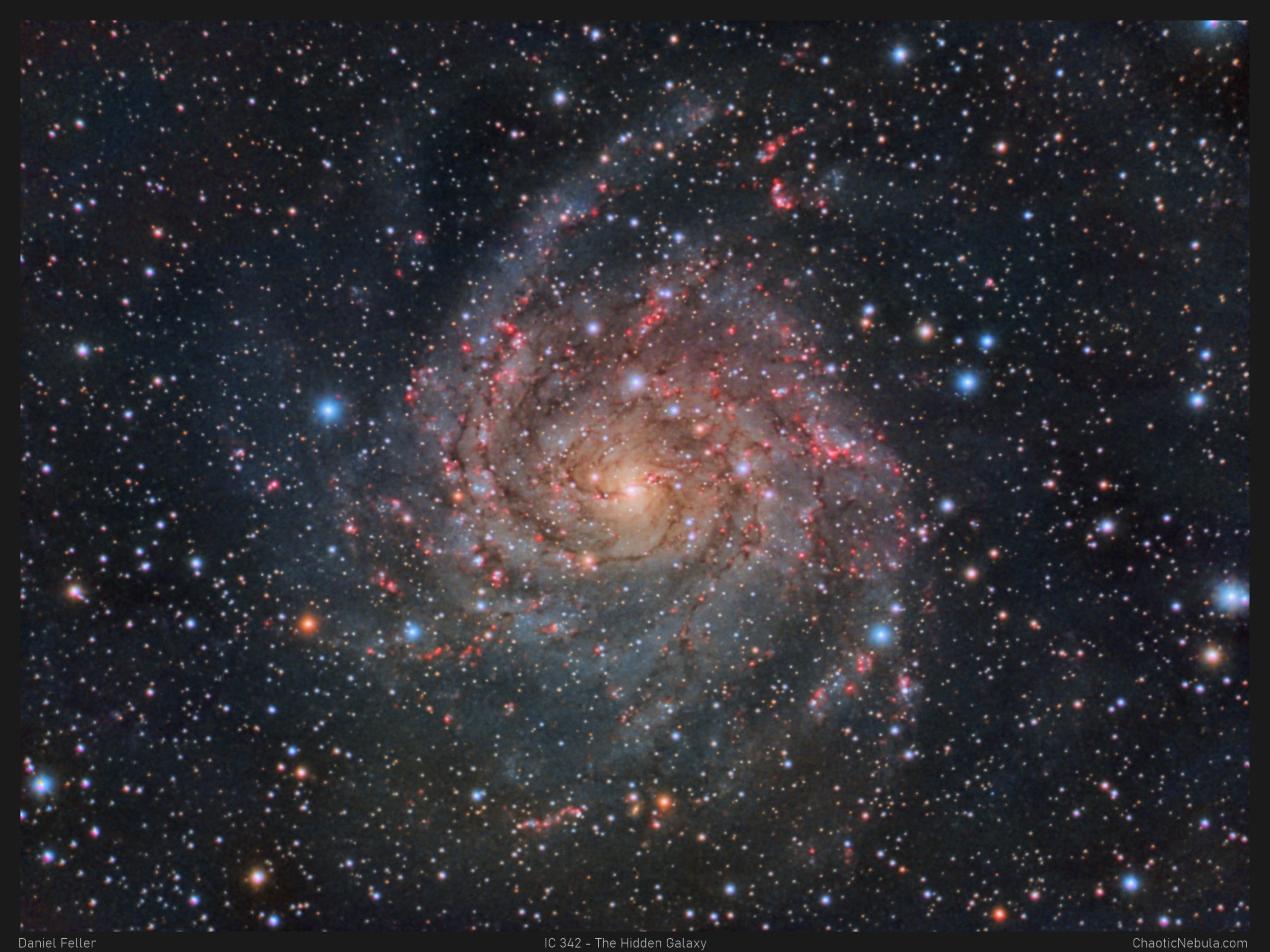
IC 342 – The Hidden Galaxy of Camelopardalis

A relatively un-photographed galaxy, IC 342 lies very close to the Milky Way, somewhere between 7 million and 11 million light years. The galaxy IC 342 lies in a dusty area near the galactic equator. Think of the galactic equator as the middle, horizontal line through the Milky Way galaxy. This is where most of the stars and dust are located. Peering through the galactic equator results in objects often being obscured. However, IC 342 really stands out.

Our local group of galaxies includes the Milky Way, Andromeda, Large Magellanic Cloud, M33, M32 plus many more. This group moves through the universe together. IC 342 leads up the IC 342 group of galaxies. The IC 342 group is the closest group of galaxies to our local group of galaxies.

(more…)
0 Comments

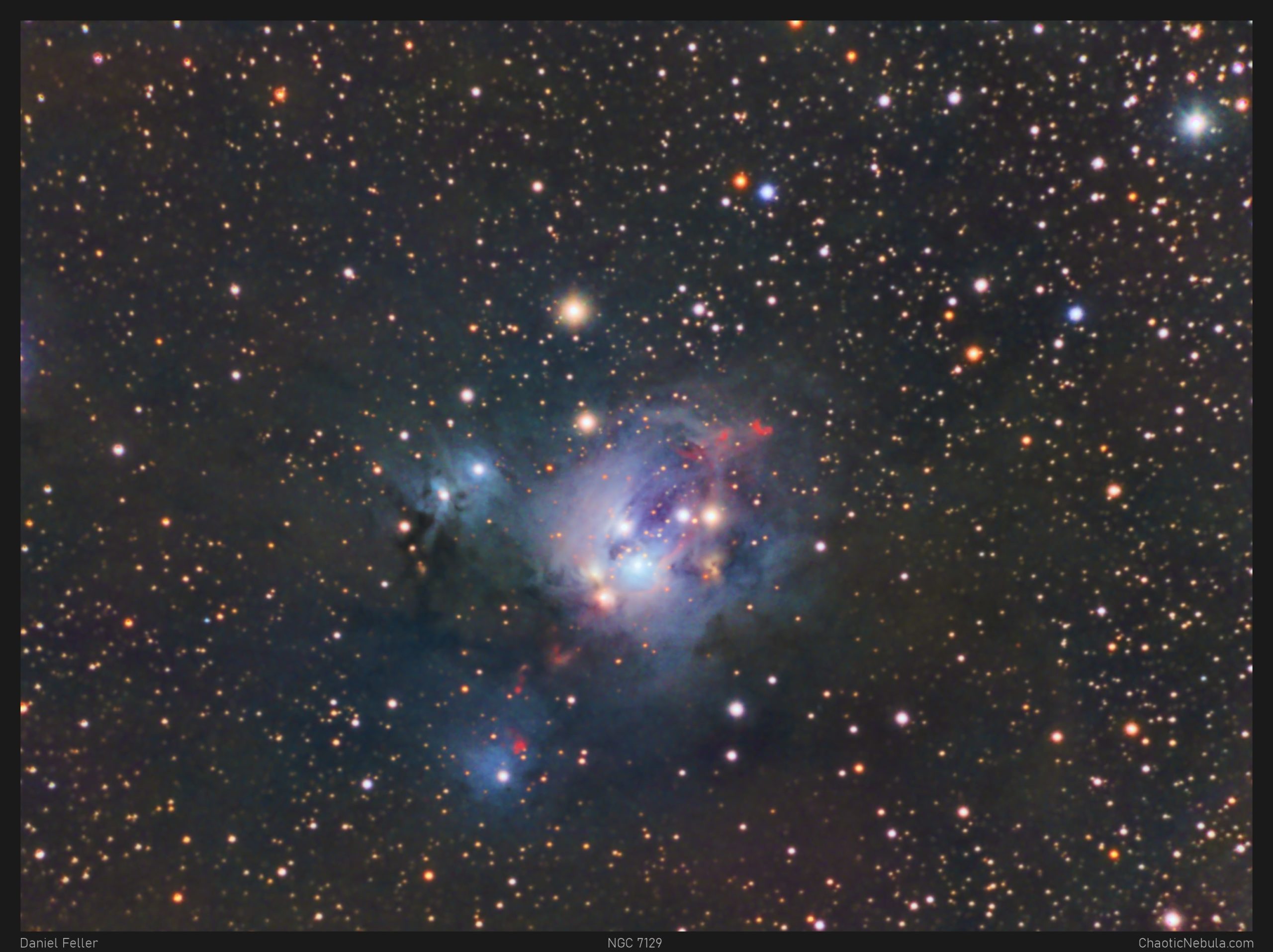
NGC 7129 – Reflection Nebula in Cepheus

NGC 7129 is a reflection nebula located in the constellation Cepheus. Located 3,300 light years away, NGC 7129 is a young open cluster of newborn stars. Many of the stars within the cluster are less than 1 million years old, which is very young when you consider many of these stars will live to be many billions of years old. The gaseous features are the left over ingredients for star formation.

NGC 7129 is a reflection nebula. Reflection nebulas reflect light from nearby stars while emission nebulas generate light from ionized gases. Reflection nebulas are images through red, green, and blue filters while emission nebulas are best imaged with narrowband filters (Sulphur-II, Hydrogen-Alpha, Oxygen-III).

(more…)

0 Comments

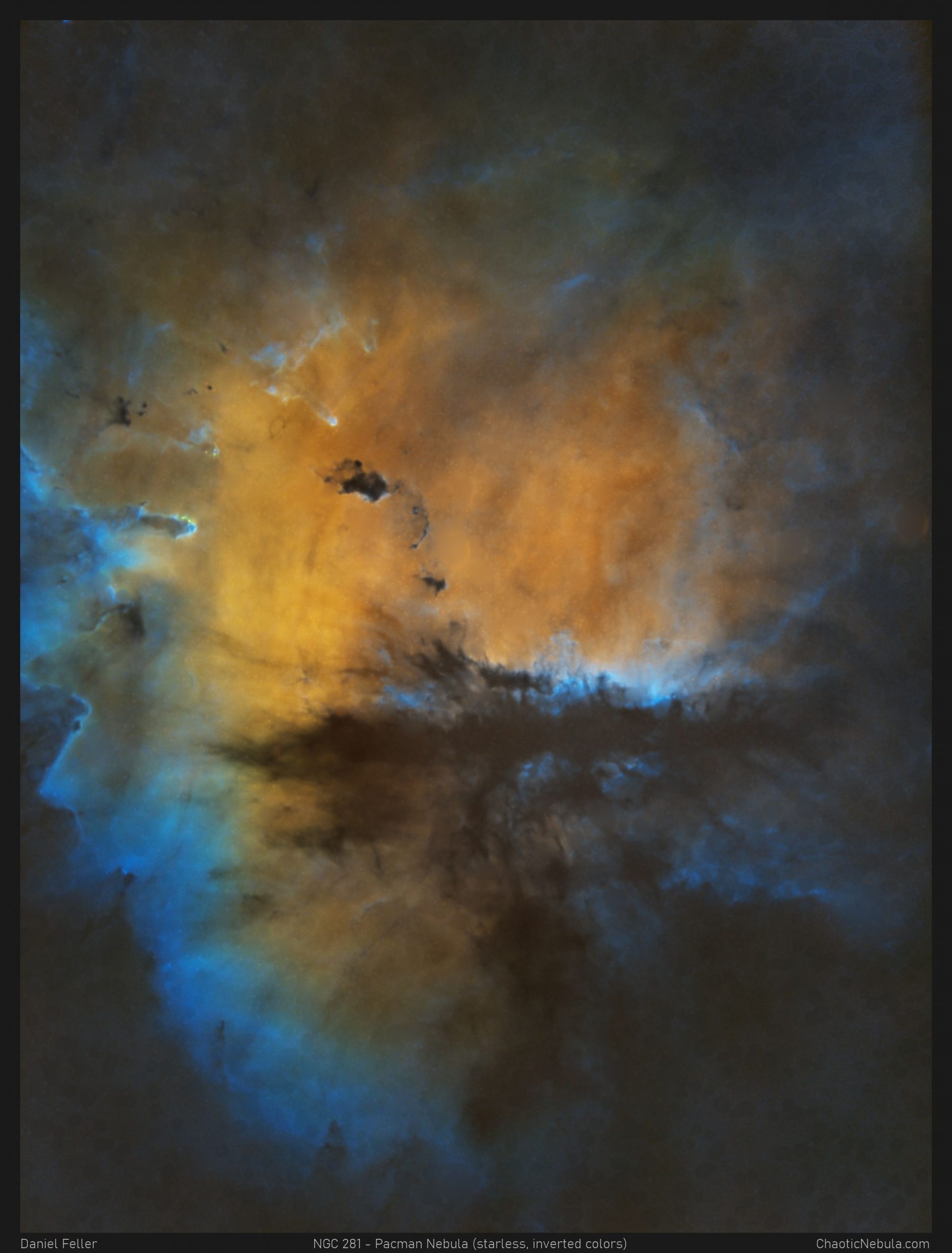
NGC 281 – Pacman Nebula in Cassiopeia

The Pacman Nebula is something I’ve been wanting to image for quite some time. Mostly because it looks like what it is called… Pacman. NGC 281 is a very bright emission nebula in Cassiopeia only 9,200 light years away. Emission nebulas emit light due to ionized gases within the cloud.

To date, this is the longest image I’ve ever captured, coming in at 30 hours of imaging time! And more amazingly, I’ve had 9 nights of clear skies over the course of about 3 weeks. It usually would take 1-2 months to get this amount of imaging time.

(more…)

0 Comments

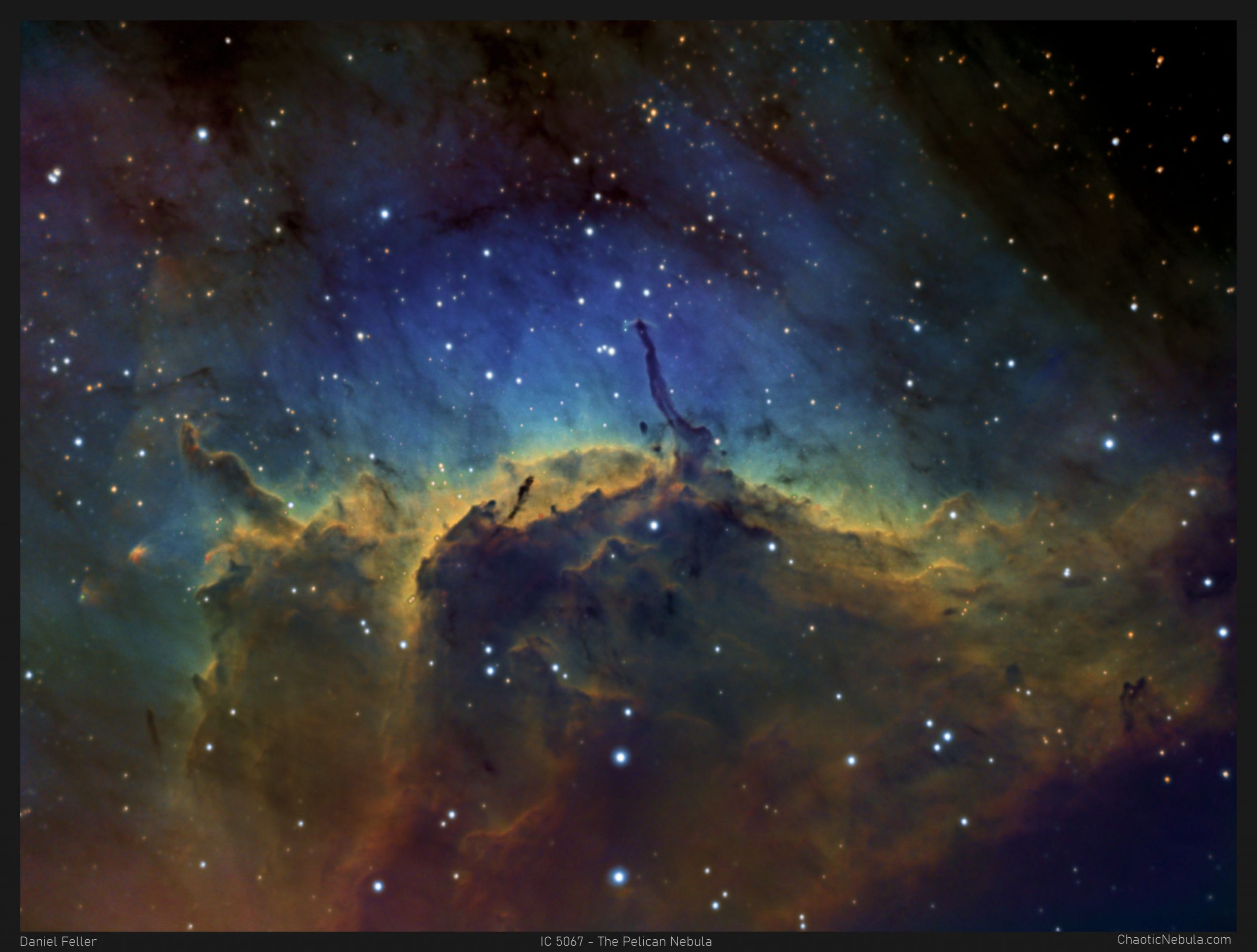
IC5067 – The Pelican Nebula in Cygnus

The Pelican Nebula is an emission nebula within the constellation Cygnus, the Swan. The Pelican Nebula is identified as IC5070, but the prominent feature imaged below is a small portion, which is identified as IC5067.

The Pelican Nebula is an active star forming region, which helps to ionize the gasses, allowing for easier imaging through narrowband filters.

The Pelican Nebula is 1,800 light years away. This nebula is quite large. The image below is a single panel. In order to capture the entire nebula, I would need to create a mosaic 3 panels wide by 4 panels tall (12 panels total).

(more…)

0 Comments