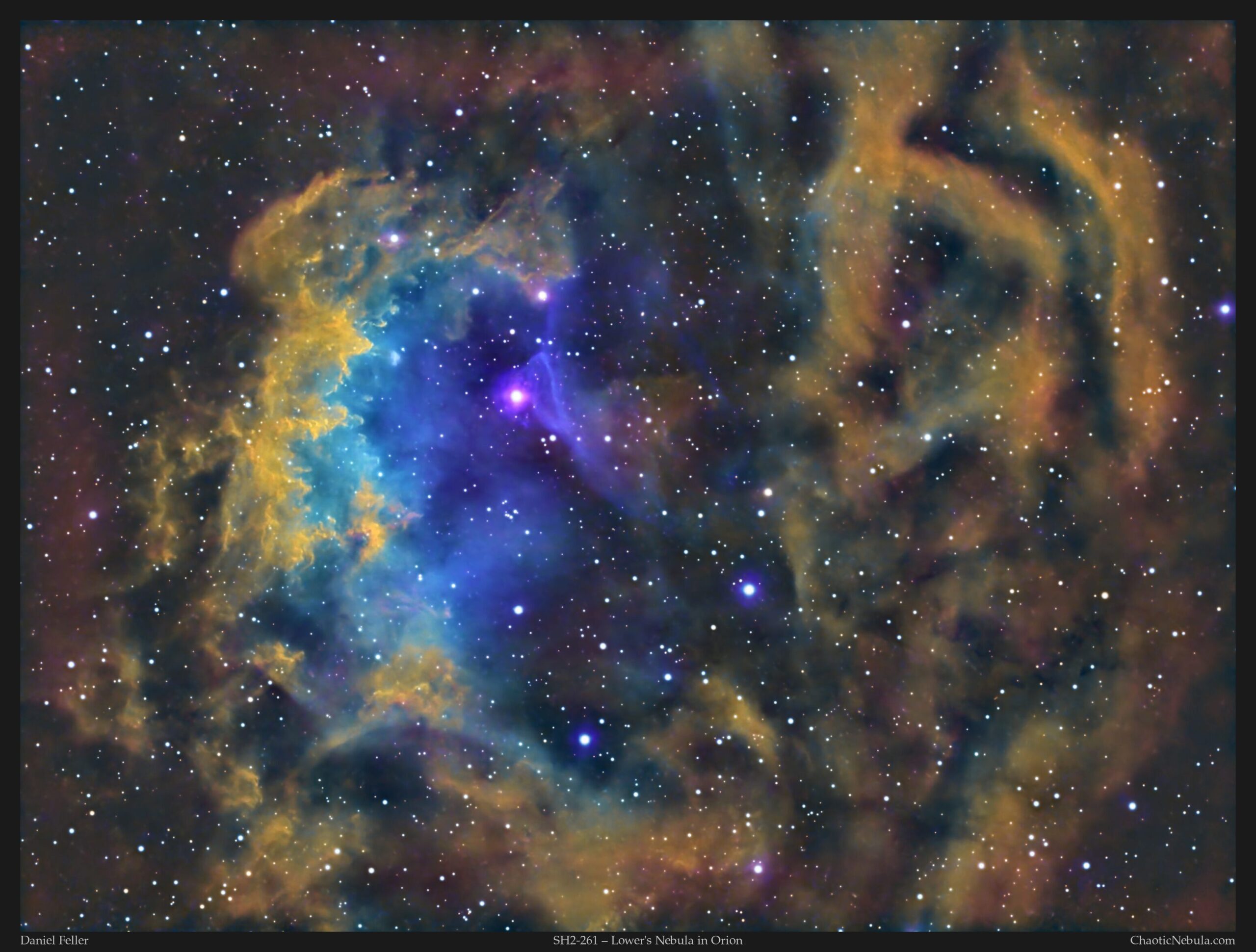
Sh2-261 – Lower’s Nebula in Orion

Sh2-261, widely known as Lower’s Nebula, is a faint and expansive emission nebula situated approximately 3,300 light-years away in the constellation Orion. Tucked away in the northernmost reaches of the Hunter, near the border of Gemini, this ionized hydrogen cloud offers a more subtle and sophisticated target than its famous neighbor, the Great Orion Nebula.

The nebula glows with a characteristic deep red hue, fueled by the intense ultraviolet radiation from the massive, hot blue star HD 41997. This O-type star acts as the primary engine for the region, exciting the surrounding hydrogen gas and causing it to fluoresce. Unlike many dense, compact nebulae, Sh2-261 is characterized by its delicate, wispy structures and a central “void” or darker region that gives it a distinctive, eye-like appearance—earning it the nickname the “Eye of Ra.”

(more…)
0 Comments

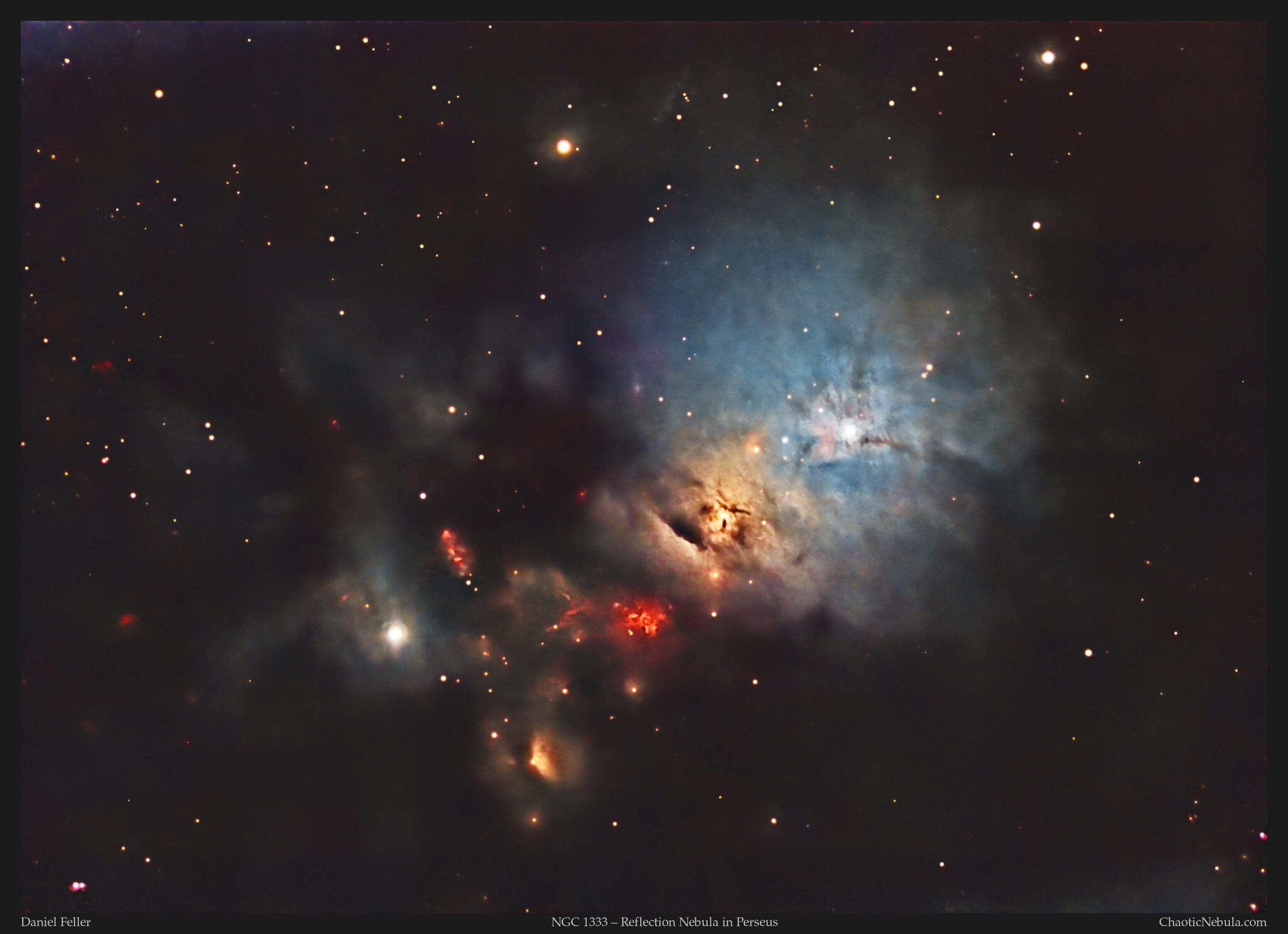
NGC 1333 – Reflection Nebula in Perseus

The center of the Perseus constellation is a reflection nebula situated about 1,000 light-years away. Known for its intricate network of dark lanes and glowing filaments, NGC 1333 showcases the intricate details of star-forming regions. This nebula is alive with activity, as countless young stars are being born within its dense molecular cloud, creating a glowing tapestry of light and shadow that draws observers into its cosmic depths.

Unlike emission nebulae, which shine brightly from ionized gases, NGC 1333’s radiance comes from the starlight of these baby stars reflecting off the surrounding interstellar dust. The nebula’s glow is often soft and diffused, with the dust scattering light in gentle hues of blue and red. The region is part of a larger molecular cloud complex, known as LBN 762, an area rich in ongoing star formation.

(more…)

Comments Off on NGC 1333 – Reflection Nebula in Perseus

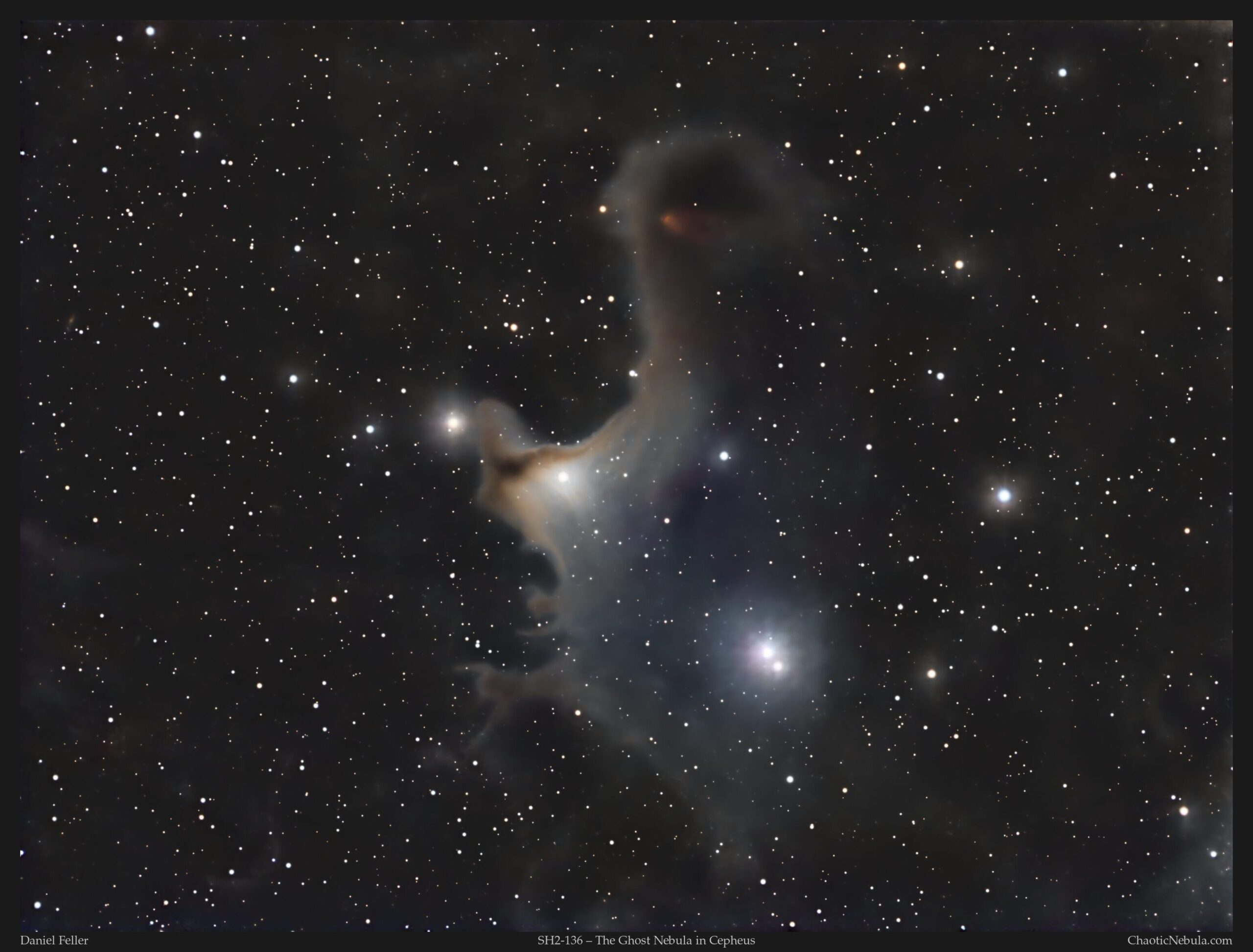
SH2-136: The Ghost Nebula in Cepheus

Sh2-136: The Ghost Nebula is a hauntingly stunning reflection nebula located approximately 1,200 light-years away in the constellation Cepheus. This eerie formation earns its nickname from its spectral appearance created by wispy tendrils of interstellar dust illuminated by embedded young stars, giving it the illusion of ghostly figures drifting through space.

Unlike emission nebulae, which glow from ionized gases, the Ghost Nebula reflects the starlight of several young stellar objects buried within the dense cloud. The dust scatters the light in soft, muted tones, often appearing golden or brownish in color due to the nature of the surrounding material. These intricate dust structures are part of a dark molecular cloud known as LDN 1177, an active region of low-mass star formation.

(more…)

Comments Off on SH2-136: The Ghost Nebula in Cepheus

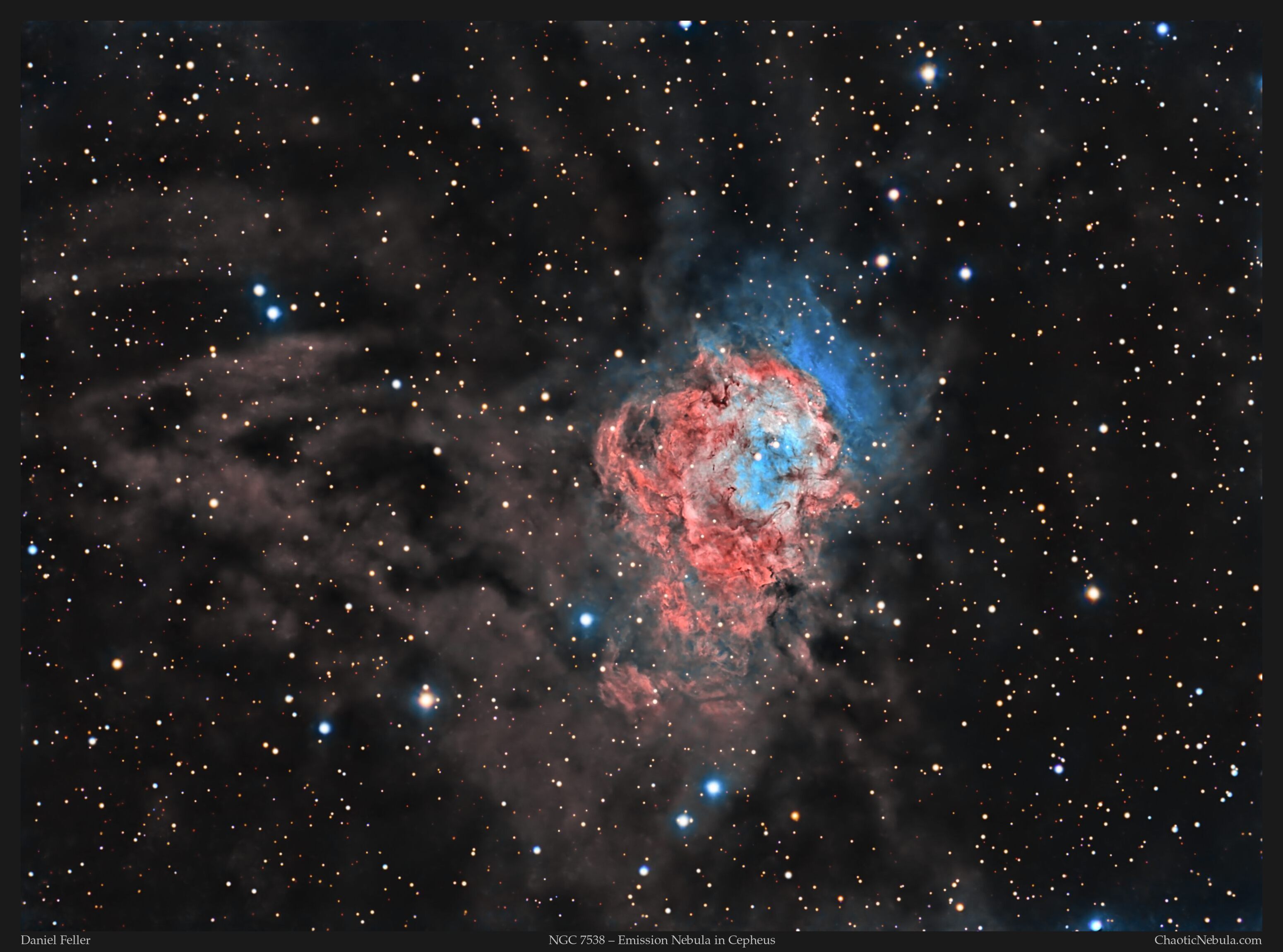
NGC 7538 – An Emission Nebula in Cepheus

NGC 7538 is a striking emission and reflection nebula located approximately 9,100 light-years away in the constellation Cepheus. Nestled within a vast star-forming region, NGC 7538 is home to some of the largest known protostars in the Milky Way. The nebula glows brightly as ultraviolet radiation from young, massive stars excites surrounding hydrogen gas, causing it to emit light—a hallmark trait of emission nebulae.

In addition to its brilliant red glow from ionized hydrogen, NGC 7538 also contains regions of reflection nebulae, where starlight scatters off dust particles, contributing soft blue tones to its complex palette. This mix of glowing gas and reflecting dust creates intricate filaments and dark lanes that highlight processes shaping the stellar nursery within.

(more…)

Comments Off on NGC 7538 – An Emission Nebula in Cepheus